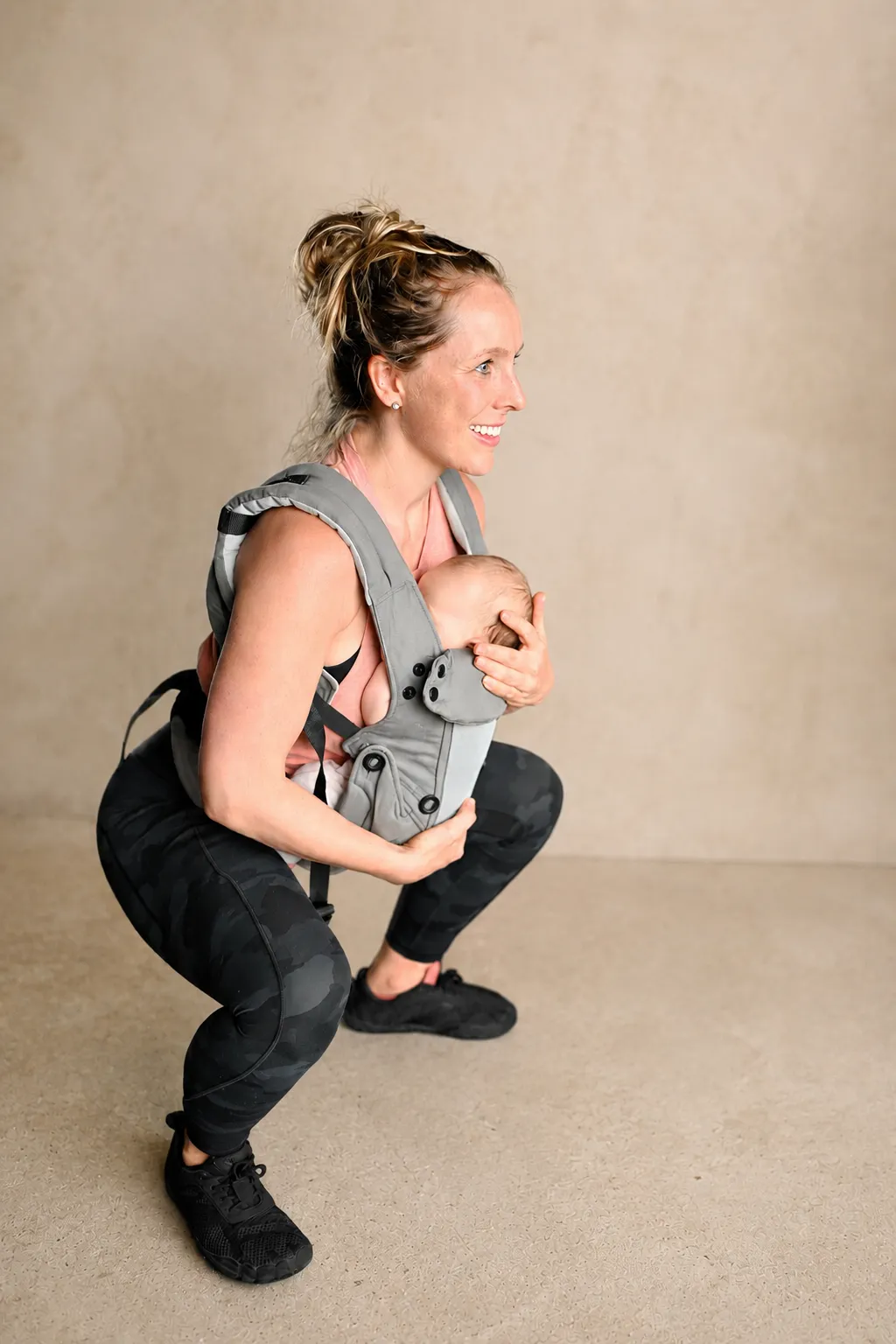
How I Train Postpartum — and Why I Do It Differently
Postpartum recovery, training, core strengthening
How I Train Postpartum — and Why I Do It Differently
Narrated on the move. Minimally edited. Completely real. This is a window into how my background as an athlete, nurse, and mom shapes the way I approach postpartum training—mindset, movement, breath, and nourishment—instead of just handing you a one-size-fits-all plan.
My Background & How I Got Here
I've been an athlete my whole life. I started as a gymnast when I was very young, then moved into competitive diving, and started weight training in my teens. Later I did competitive bodybuilding for a couple of years. That's really where I learned how to train and eat to support building muscle. And honestly, that's where I started treating my body like a machine.
Eventually I wanted to go deeper, so I got certified as a personal trainer. For eight years I worked as a trainer off and on, alongside my full-time nursing job. It was always a side hustle. And if I'm being honest, it never quite felt fully aligned for me to do it full-time.
📌 Key Takeaway: Years of athletic training and nursing gave me a unique lens on how women’s bodies work, but it still didn’t answer all my questions about female health.
Mind–Body Connection & Gut Health
At the same time, I was on my own journey of self-discovery. Connecting mind and body, from the inside out. I've always believed the body is an interconnected web, not a bunch of separate systems. Our mindset directly impacts our gut health. And our gut health impacts our mindset right back. There's a quote often attributed to Hippocrates, the father of medicine, that all disease begins in the gut. Historians aren't totally sure he actually said it. But the idea has stood the test of time regardless, and it's something I believe in.
"The body is an interconnected web. What happens in your gut echoes in your mind, and what happens in your mind echoes in your gut."
Discovering Women’s Health (The Hard Way)
So my path here wasn't simple or straightforward. I'm not just a pre and postnatal specialist who always knew this was the plan. I got pregnant, and I remember thinking, oh my god, I don't actually know that much about female health. Not as a nurse. Not even as a woman. How crazy is that.
So I started studying pregnancy, nutrition, and postpartum health. And that's when it really clicked for me. This is what I wanted to do. Here's the thing though. I've devoted my whole life to health and wellness, to personal training, not even for my career, more as a passion. And I still felt under-educated on this. So if I'm under-educated after ten years of intentional study, I have to imagine most people, who haven't studied this at all, are at even more of a loss. I don't say that to sound conceited. I just mean it as an honest observation. Western medicine doesn't talk about nutrition and women's health nearly enough. So I started studying pre and postnatal training after getting pregnant, and if I'm being real, most of that studying happened after I had Evie.
💡 Pro Tip: If you feel under-educated about your own body, you are not alone. The system under-teaches women’s health; your confusion is not a personal failure.
Why I Don’t Hand You a One-Size-Fits-All Plan
That's my background. Now let's get into how I actually train postpartum clients, and why I'm not just handing you a step-by-step workout plan.
It starts in the mind. Our culture teaches women that we're basically small men, and that we can do all the same things the same way. And look, I'm all about women's empowerment. We can do a lot. Honestly, I believe women are more powerful than men in a lot of ways, and I think that's exactly why culture has tried to make us feel small or weak. We may not naturally lift the same amount of weight. But we have strength in resilience, and in so many other ways. We build humans inside our own bodies. We push them out through our bodies. And then we nourish and grow them with our bodies again. It's incredible. It's literally magical.
📌 Key Takeaway: Postpartum training isn’t just about sets and reps. It’s about honoring the uniquely powerful, cyclical, and resilient nature of the female body.
Mindset Before Weight Loss
So before we even talk about losing weight, I want us to work on our mindset around it. Nourishing baby comes first. That's the priority. If you're holding onto a little extra weight, be kind to yourself about that. That weight is part of what's nourishing your baby. Starting from a positive place gets us better results. In my experience, we yield more positive results when we speak kindly to ourselves, and it tends to happen faster too.
Your body is not a problem to fix; it’s a home that just grew a human.
Breathwork & Reconnecting to Your Pelvic Floor
The next thing I teach is breathwork. Reconnecting to the pelvic floor through breath, and through slow, intentional movement. Taking the time to reconnect now gives you more sustainable, stronger results long term. You won't end up dealing with leaking, or pain, or having to backtrack later and fix it after the fact. I'll go deeper on that in another post.
These are things you can start immediately postpartum. My own midwife encouraged me to do this. I spent my first forty days mostly lying flat. Very minimal activity. I did breathwork lying down. As I got closer to the four week mark, I added heel slides lying down, and hip tucks, or glute tucks, also lying flat. Simple movements, just to reconnect.
💡 Pro Tip: Think of early postpartum movement as reintroduction, not “getting your body back.” Slow breath and tiny motions are powerful.
When You’re Cleared at Six Weeks
Once you're cleared, usually around six weeks, that clearance means you're cleared for regular, light activity. It does not mean you're ready for high intensity training or heavy lifting. Start slow. Think Pilates-style movement. If you were already experienced with weightlifting before, you can return to something similar, just lighter. If you're newer to working out, or you only started once you got pregnant, the basics matter even more. Reconnecting your movement to your breath is essential. People love to dismiss Pilates. But Pilates teaches you to connect to the small, fine muscles, to move slowly and with control, and to breathe through the movement. That's a really important foundation to build real strength on top of.
Trusting her abilities while staying close teaches both courage and safety.
Nutrition: Building Muscle & Feeding Baby
The last piece is nutrition, and it can't be ignored. Taking care of your body nutritionally is essential, so you can build muscle and also keep making breast milk for your baby. Which means you need to be eating in a surplus. You can lose fat while breastfeeding, especially early on. But I'll say it again, because it matters. Focus on mindset first. Don't rush the weight loss. The moment you rush it, the stress and the nutrient imbalance show up. That leads to hormonal fluctuations. Which leads to emotional distress. And your baby responds to all of that too, including your milk production.
📌 Key Takeaway: Eating enough is not “failing” at weight loss. It’s how you protect your hormones, your mood, and your milk supply.
Symptoms Are Signals, Not Your New Normal
Once you're reconnected to your breath and you're not in pain, I want you to know something. Any symptom you're feeling isn't just something to accept as normal. Pressure, a little leaking, feeling disconnected. Those are all things worth working through, not living with. Reconnect first. Then we build strength progressively from there.
💡 Pro Tip: “Common” postpartum symptoms are not always “normal.” If something feels off, it deserves attention, not dismissal.
Why I Love Barefoot Training
One thing I always encourage is working out without shoes on. It keeps you connected to your feet. Everything works from the feet up. And if you're disconnected from your toes, that usually means you're disconnected from your pelvic floor too. It's an easy way to self-assess.
Give Yourself the Full Nine Months
And last thing. Please give yourself the nine months. You are an incredible goddess who built a human being, inside your own body, for nine months. That is a massive change for your body to go through. Most people gain a minimum of thirty pounds during that time. That's a lot to gain in nine months. So it's a lot to expect your body to lose in just a couple of weeks. Give yourself that same nine months before you start thinking something is wrong.
If you give yourself that time, your hormones stay more stable. If you focus on slow, progressive building, by nine months you can absolutely shift your focus toward weight loss if that's what you want. I promise you, you'll feel so much better. And the whole process will be so much more enjoyable.
📌 Key Takeaway: You grew a human for nine months. Giving yourself nine months to recover is not indulgent; it’s realistic and respectful.
Slow, Steady Weight Loss & Getting Support
And to be clear, I'm not saying don't lose the weight you gained during pregnancy. Steady, gradual weight loss is healthy, and it's expected, when you're eating a well-balanced nutrition plan and following a progressive strength training program. This isn't about avoiding it. It's about not pushing hard and fast. Take it slow and steady, and your body will do what it's meant to do.
If you need further support or have questions about any of this, reach out on IG or book a free consult with me. I'd be happy to help in any way I can.
Frequently Asked Questions
Q: When can I start exercising after giving birth?
A: You can begin gentle breathwork almost immediately, lying down, to reconnect your core and pelvic floor. Around four weeks I added simple moves like heel slides and hip tucks. Most moms are cleared for light activity around six weeks, but always follow your own provider's guidance.
Q: What does being "cleared at 6 weeks" actually mean?
A: Being cleared usually means you're ready for regular, light activity, not high-intensity training or heavy lifting. Start with slow, Pilates-style movement to rebuild connection, then progress your strength from there.
Q: Is it normal to leak, feel pressure, or feel disconnected postpartum?
A: It's common, but common isn't the same as something you simply have to live with. Once you're reconnected to your breath and pain-free, symptoms like leaking or pressure are worth working through, and a pelvic floor physical therapist or your provider can help.
Q: Should I try to lose the baby weight right away?
A: I'd gently encourage you not to rush. Nourishing your baby comes first, and holding onto a little extra early on is part of that. Give your body around nine months before assuming anything is wrong; steady, gradual weight loss with good nutrition and progressive strength training is healthy and expected.
Q: Can I lose weight while breastfeeding?
A: You can, especially early on, but it's important to eat enough to support both muscle and milk supply, which often means eating in a surplus. Rushing fat loss can stress your body, affect your hormones, and impact your milk production.
Q: Why do you recommend working out without shoes postpartum?
A: Training barefoot keeps you connected to your feet, and everything works from the feet up. If you feel disconnected from your toes, it often reflects disconnection from your pelvic floor, so it's an easy way to check in with your own body.

